
The rules nobody explains
Padel is easy to pick up, but a few rules catch almost everyone out. Most of the arguments I hear on court come down to the same five questions, usually from players who already know tennis and assume the rules are the same.
Here they are, explained simply. Everything below follows the official FIP Rules of Padel.
Rule 1: The serve
The padel serve looks easy, but there are more ways to get it wrong than people expect.
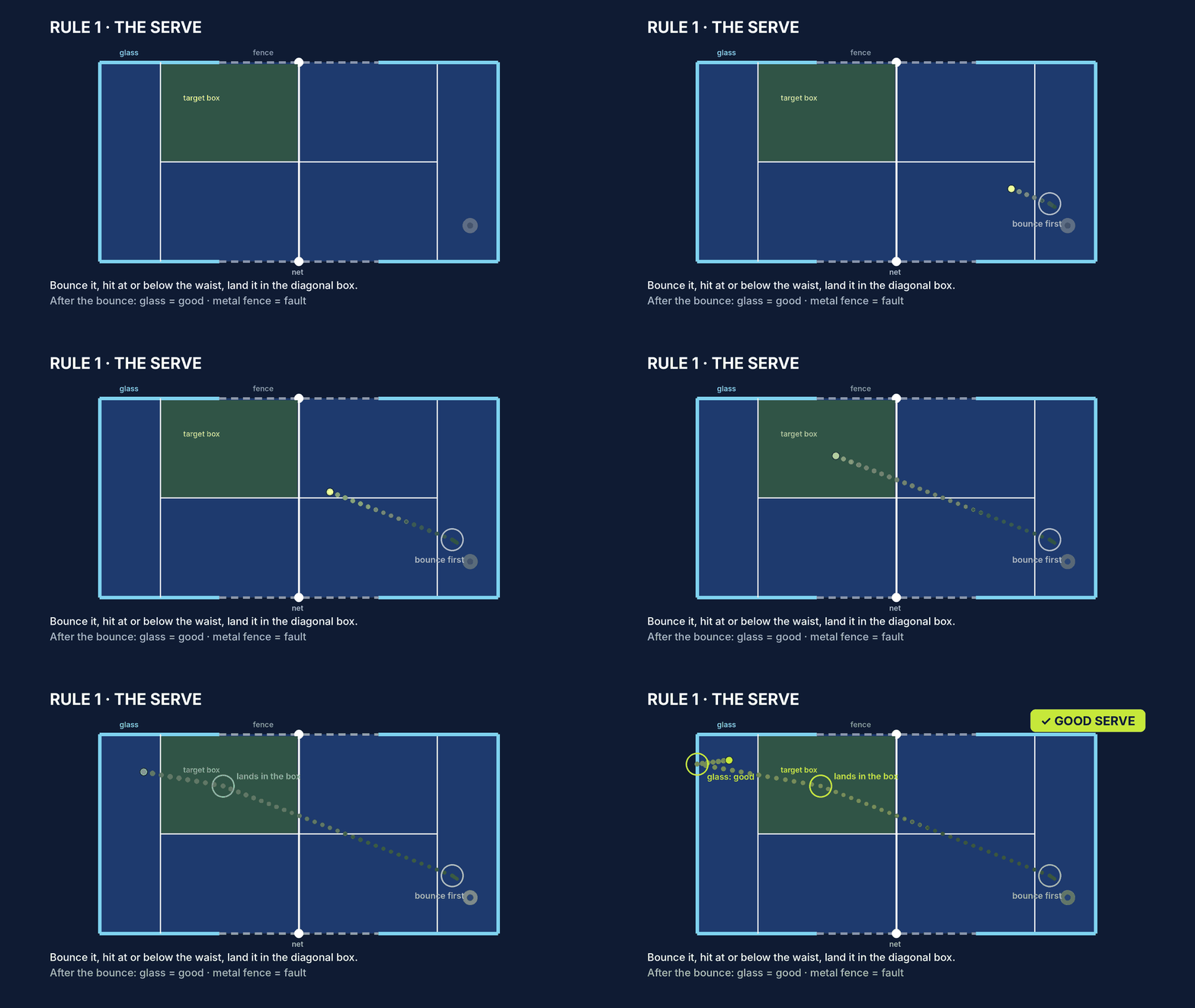
Stand behind the service line. At least one foot behind the line, and you can't touch the service line or the centre line with your feet when you hit.
Bounce it first. Drop the ball and let it bounce on your side, behind the service line, before you hit it.
Hit it at or below your waist. No overhead serves. If the ball is above your waist when you make contact, it's a fault.
Diagonal, inside the box. Like tennis, the ball has to land in the opponent's service box diagonally opposite you.
Two chances. You get a second serve if the first one is a fault.
The one that surprises people: after your serve bounces in the box, it can hit the glass and it's still good. But if it bounces in the box and then hits the metal fence before bouncing again, it's a fault.
Rule 2: The ball touches the net
It depends on whether you're serving or rallying.
On the serve. If the ball clips the net and lands in the correct box, it's a let and you take that serve again. If it was your first serve, you still have two serves. If it clips the net and lands outside the box, it's just a fault.
During a rally. There are no lets. If your shot clips the tape and drops over into the opponent's court, it's a good shot and play continues. Bad luck for them.
What you can't do is touch the net yourself. If your racket, body or clothing touches the net or the posts while the ball is in play, you lose the point. The same goes for reaching over and hitting the ball before it has crossed to your side.

Rule 3: The ball hits the net post
This one comes up a lot, because the posts sit right at the edge of the court.
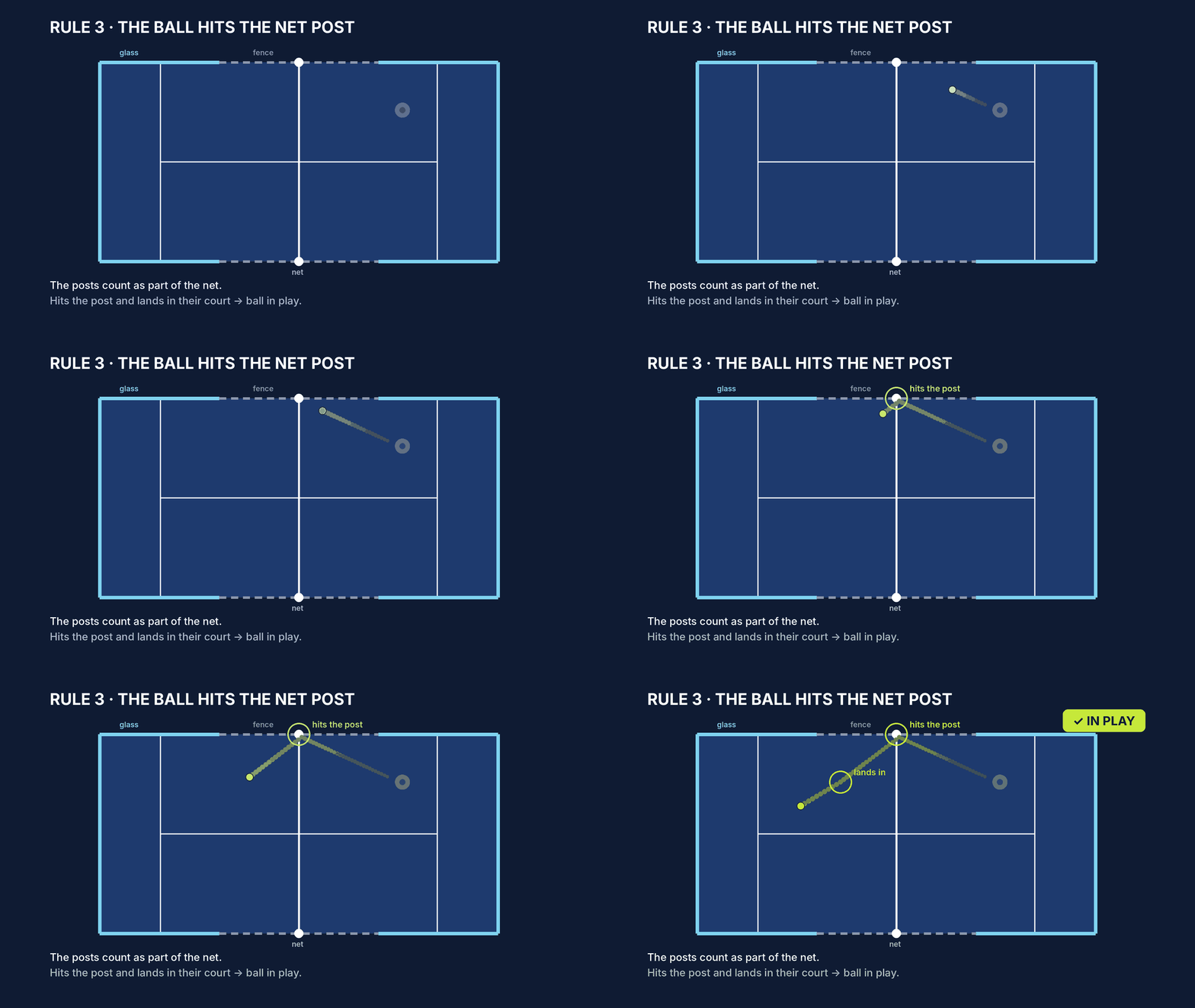
The net posts count as part of the net. So if your shot hits the post and then lands in your opponent's court, the ball is in play, exactly as if it had clipped the net. On the serve, a ball that touches the post and lands in the correct box is a let.
Rule 4: Which walls can you use?
The walls are what make padel padel, but there's a simple rule about who can use which wall.
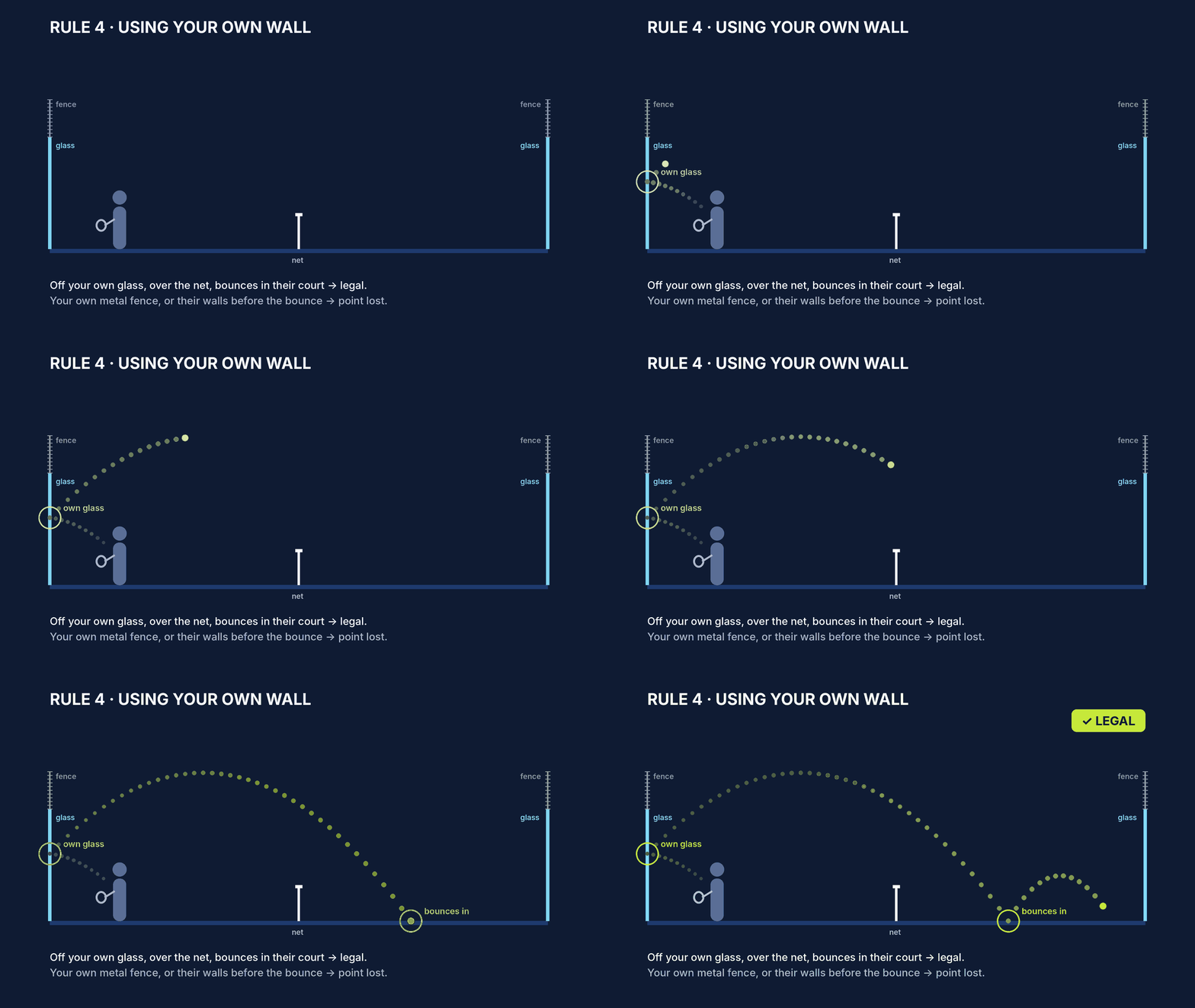
Your own walls: yes. You can hit the ball into the glass on your own side and let it come off the wall and over the net, as long as it then bounces in the opponent's court. It's a difficult shot, but it's legal.
Your own fence: no. If your shot hits the metal fence on your side, you lose the point.
The opponent's walls: only after a bounce. Your shot has to land on the floor in their court first. After that bounce, it can hit their glass or fence and it's still in play. If your shot goes over the net and hits their glass or fence before it bounces, that's your point lost.
A ball that hits the fence will often come off at a strange angle or barely bounce at all. That's legal, just awkward to return.
Rule 5: The top of the cage and balls that leave the court
Sometimes the ball bounces in the opponent's court, flies off the top of the glass and out of the cage. Who gets the point?
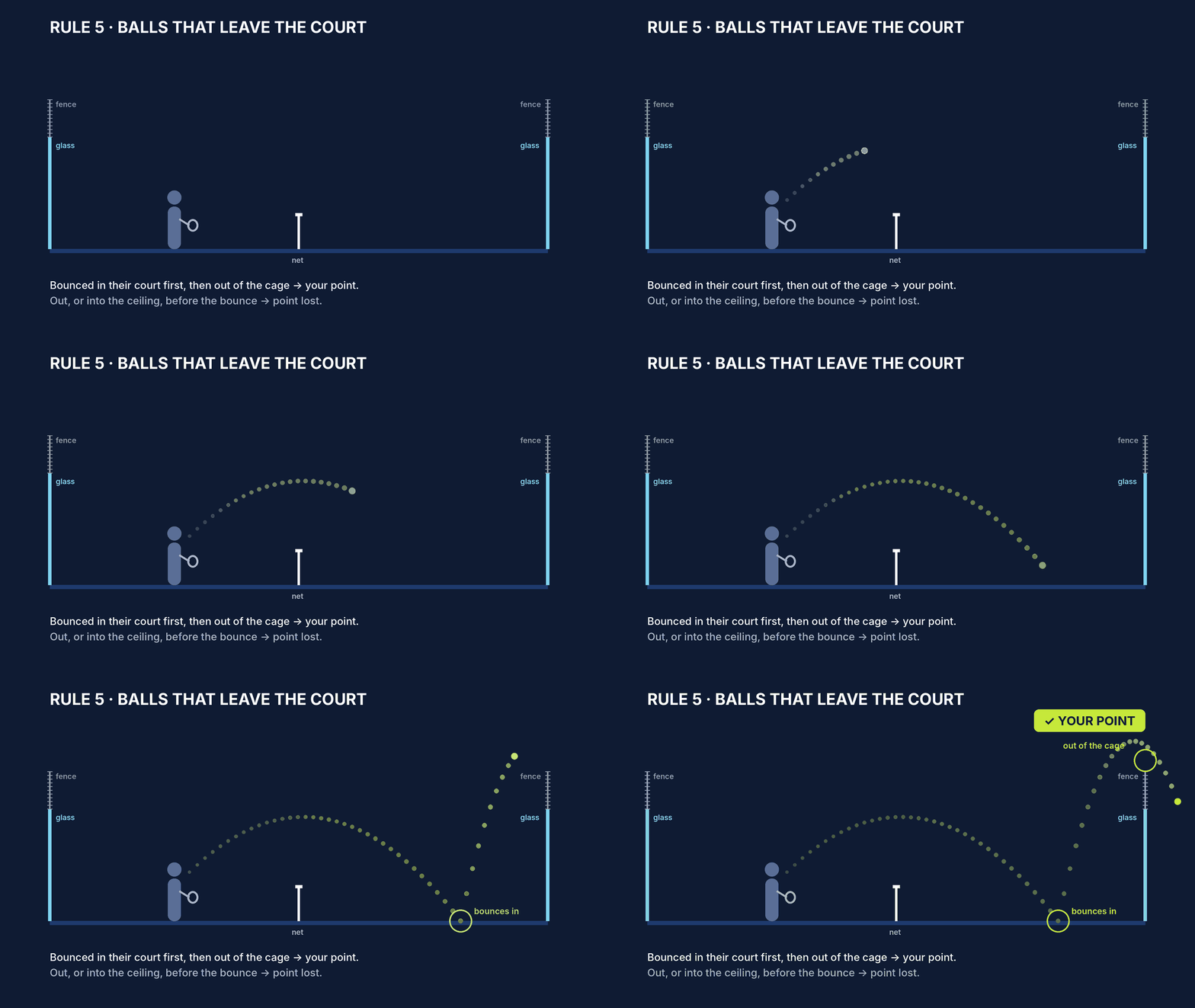
It's easier than it looks. If your shot bounced correctly in your opponent's court first, these are all your point:
Over the back wall and out. The ball has left the court after a good bounce.
Into the ceiling or the lights. Same rule, as long as it bounced on their side first.
Stuck on the top of the wall. If the ball lands and stays on the flat top edge of the wall, it's your point.
Through a hole in the fence. Also your point.
Over the side wall or through the door. On courts built for it, your opponents can run outside and play it back. If they can't return it before the second bounce, it's your point.
But if the ball goes out, or hits the ceiling, without bouncing in your opponent's court first, that's your point lost.
Playing outside the court is only allowed when the court has enough space around the doors. In normal club play, agree before you start whether you'll allow it.
The simple test
When in doubt, ask one question: did the ball bounce once in the right place?
Bounced once in the opponent's court, then hit glass, fence, post or anything else? Usually good. Hit their walls, the ceiling or went out before bouncing? Usually not.
Once these five rules click, you'll spend less time debating and more time playing.
See you on court.
NJ, Level 4 LTA accredited and Padel MBA certified coach
